Could Countries Today Restore the Religions They Had in Antiquity?

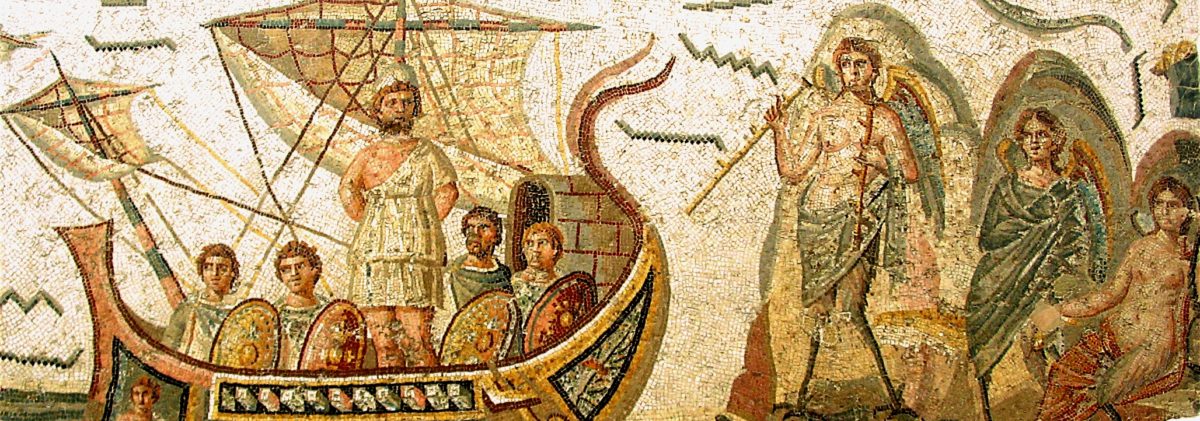
Most people have heard about the religions that were practiced in ancient times in places like Greece, Rome, Egypt, Persia, and Scandinavia. Some people have wondered things like, “What happened to those religions? Would it be possible to revive them today in the countries where they were once practiced? What would it be like if someone did?”

Not all ancient religions completely died out. Most notably, Zoroastrianism, the religion of ancient Iran, never completely died out and is still practiced by some people in Iran today. Other ancient religions, such as ancient Greek polytheism, did die out, but have been revived by small groups of worshippers in the modern age.

None of these ancient religions, however, are the dominant religion in the countries where they were once practiced today and it is highly unlikely that any of them will become dominant in those countries again anytime in the near future.

Continue reading “Could Countries Today Restore the Religions They Had in Antiquity?”

Were the Ancient Spartans Blond?

The ancient Spartans have been a subject of intense fascination and speculation for thousands of years. The Sparta that exists in the popular imagination is often quite different from the one that existed in historical reality. This phenomenon is so well established that it even has a name; historians have labelled the imaginary Sparta that has so intrigued people throughout history “the Spartan mirage.”

One very peculiar aspect of how Sparta has been imagined in modern times is the idea that the overwhelming majority of the ancient Spartans had blond hair. This idea was far more popular a century ago than it is today, but it still hasn’t entirely died out. The idea is especially prominent among white supremacists, who like to imagine the ancient Spartans as blond Aryans who defended Greece against the non-white barbarian hordes of the Persian Empire.

The idea of the “blond Spartans,” however, is based on very little evidence. People mostly only continued to believe in it because it supports their own mythology of racial superiority.

Continue reading “Were the Ancient Spartans Blond?”

What Would the Ancient Greeks Think of Donald Trump?

The current occupant of the White House is such a unique and peculiar figure in the history of the United States that many people have wondered what various people from history would think of him. I’ve encountered a number of questions dealing with this theme on Quora. For instance, many people have wondered what the Founding Fathers would think of him. What would Cicero think? What would Socrates think? There are so many different questions and scenarios that people have been asking about. Today, though, we’re going to look at the question of what the ancient Greek public at large would think of him.

It is extremely difficult to say what the ancient Greeks would think of Donald Trump, partly because the ancient Greeks lived in a world that was so drastically different from our own. If someone brought all the people who lived in the Greek world during the Classical Period (lasted c. 510 – c. 323 BC) back from the dead today, they would barely even recognize the world we live in.

Furthermore, the ancient Greeks were as diverse in their thoughts as any people from any time period, so, obviously, opinions pertaining to Donald Trump would vary quite considerably from person to person. Some people would probably like Trump, while others would detest him.

Anything that we say on this subject will necessarily be speculation, since, obviously the ancient Greeks are all long dead and it is impossible to say for certain what their opinions would be. Nonetheless, I think we can plausibly speculate about how the majority of people who lived in ancient Greece would most likely view Trump, if they were suddenly brought to life today and told about him.

Continue reading “What Would the Ancient Greeks Think of Donald Trump?”

How Do We Know Ancient Texts Are Really Ancient?

There seems to be a lot of people who think that, because we do not have the original manuscripts of ancient texts, that is somehow deeply suspicious. While it is certainly true that there are some places in some texts where we are not completely sure what the original text said, in the vast majority of cases, it is possible to reconstruct exactly or at least almost exactly what the original text said. Even when the exact original wording of a text is unclear, we usually have a pretty good idea of what the original author wrote.

Continue reading “How Do We Know Ancient Texts Are Really Ancient?”

Boudicca Was Actually a Horrible Person

The first-century AD Celtic warrior queen Boudicca is widely seen a British folk hero. She has been so admired for so long that her image has literally become national personification of Britain. Outside of Britain, she is seen as an icon of female empowerment and her revolt against the Romans has been interpreted as a rebellion against both foreign and patriarchal oppression.

Despite how she has been portrayed in modern culture, however, the historical Boudicca was certainly not a feminist. In fact, for what it’s worth, Boudicca makes a frankly very disturbing hero for modern feminists, given the horrible atrocities that she committed—not just against men, but also against women as well.

Continue reading “Boudicca Was Actually a Horrible Person”

What Was the Conversion of the Roman Empire to Christianity Really Like?

The transition from traditional Greco-Roman religion to Christianity in late antiquity has often been portrayed in terms of the so-called “triumph of Christianity over paganism.” This is an idea that originates from Christian triumphalist accounts of the era that portray Christianity as having eradicated “paganism” within a single generation.

Anti-Christian writers, especially in recent years, have seized upon this propagandistic idea of the “triumph of Christianity” and twisted the Christian propaganda into anti-Christian propaganda by portraying Christians as militant zealots and obscurantists who destroyed classical civilization in the span of a single generation because it was too great for their small minds. Unfortunately, this story is no more accurate than the story Christians have been telling for centuries; indeed, if anything, it is even less accurate.

In reality, the process of the Roman Empire’s “conversion” to Christianity was both far more gradual and far complicated than it has often been portrayed. In many ways, traditional religions were not so much “eradicated” as transformed. In many ways, Christianity and traditional religions melded so that the “Christianity” that emerged from late antiquity was not the same “Christianity” that had gone in, while “paganism” was more domesticated than vanquished.

Continue reading “What Was the Conversion of the Roman Empire to Christianity Really Like?”

What Was Really in the Library of Alexandria?

It is no secret that I spend a lot of time debunking popular misconceptions about the Library of Alexandria. I do this because modern people are absolutely obsessed with the Library of Alexandria and all the amazing documents they believe it must have contained. Today I’m going to revisit the Library of Alexandria yet again to debunk some ideas about what was in it.

Lots of people like to imagine that the Library of Alexandria was filled with amazing scientific information that has been lost. They like to imagine that it could have housed all sorts of breathtaking secrets about the universe that even modern scientists might not know. These ideas, though, are wrong.

I’ve addressed this subject before, but today I want to address it in-depth, debunking some specific claims about the Library of Alexandria’s contents and bringing people’s expectations more down to Earth.

Continue reading “What Was Really in the Library of Alexandria?”

Ancient Cities Weren’t All Just Abandoned

There seems to be a widespread misconception that, after 476 AD, civilization just disappeared from the Mediterranean world and all the cities of the ancient world were totally abandoned. That’s not what really happened. In fact, all the most famous cities of the classical world survived after the so-called “fall of Rome.” People didn’t just leave or die out and leave all the cities completely barren.

Cities like Athens, Sparta, Alexandria, and Rome have long, fascinating post-antique histories and are even still populated even today. In this article, we will explore what really happened to these cities after the so-called “fall of Rome” and the “end of antiquity.” The true history is actually a lot more interesting than the popular narrative about civilization just totally collapsing.

Continue reading “Ancient Cities Weren’t All Just Abandoned”

Did Ancient “Pagans” Really Worship Nature?

If you go around and ask a bunch of people what “paganism” is, chances are, most people will tell you something like “nature worship.” It is true that some contemporary Neopagans do indeed worship nature, albeit in various forms and in various ways. Even many Neopagans who do not literally worship nature still hold nature in very high regard. This conception of “paganism” as “nature worship,” however, is, for the most part, not applicable to the ancient world.

The term “paganism” is problematic in a historical context for all kinds of reasons, but it is most often applied to the various polytheistic religions that were practiced in the greater Mediterranean region (i.e., the Middle East, North Africa, and Europe) in ancient times before Christianity. When we look at these religions, we actually find a rather startling absence of nature-worshippers.

For most people in the ancient Mediterranean world, nature was a frightening and dangerous thing that could never really be trusted. Most of the deities worshipped in ancient times by so-called “pagans” were not seen as personifications of nature or natural forces, but rather as supernatural beings governing certain areas of human endeavor. Some deities were associated with aspects of the natural world, but the deities themselves were almost always clearly distinguished from the phenomena with which they were associated. Furthermore, even those deities associated with natural phenomena were usually associated with cultural phenomena as well.

Continue reading “Did Ancient “Pagans” Really Worship Nature?”

Why Did We Start Using Greek Names for Greek Deities?

Today, in the English-speaking world, the classical deities are most widely known by their Greek names. Up until the late nineteenth century, though, the deities of the ancient Greek and Roman worlds were almost exclusively known in the west by their Roman names. The Greek names were almost totally obscure among English-speakers and they were almost never used.

What is it that changed? Why did we stop using the Roman names and start using the Greek names? The answer to this question is complicated and there are a lot of cultural factors that go into it, but I think that a large part of the motivation for the switch came as a result of the belief that the Greeks were culturally superior to the Romans because they were supposedly more “western.”

Continue reading “Why Did We Start Using Greek Names for Greek Deities?”