Ancient and Medieval People Believed that Unicorns Were Real—and Murderous

No one can deny that Death of a Unicorn, released in March of this year, is a very strange film. It is a horror comedy in which a man and his daughter driving their car through a remote forest accidentally hit and fatally injure a unicorn. Soon, the unicorn’s body ends up in the hands of Big Pharma executives, who discover its horn and blood can miraculously cure all ailments, and want to sell its ground-up horn and blood to wealthy customers for big profits—until the unicorn’s angry parents come to seek violent revenge for their child.

Readers may, however, be surprised to learn that this film, for all its surreal imagery, is actually much closer in important ways to how ancient and medieval sources describe unicorns than perhaps any other recent media depiction. While twenty-first-century popular culture generally portrays unicorns as friendly, docile creatures and associates them with plush toys and backpacks for young girls, in premodern traditions, the most consistent traits associated with unicorns are their fierceness, their impossibility to tame, their devotion to their foals, and their ability to kill humans who would seek to capture them in large numbers.

Continue reading “Ancient and Medieval People Believed that Unicorns Were Real—and Murderous”

Is Athena Named After Athens, or Vice Versa?

In ancient times, the people of the Greek city-state of Athens regarded the goddess Athena as their patron. The special relationship between the goddess and the city is reflected in their shared name, and, naturally, many people have assumed that the Athenians named their city in honor of Athena. Startlingly, however, historical and linguistic evidence may support the opposite conclusion: that the goddess Athena derived her name from the city of Athens, rather than vice versa.

Continue reading “Is Athena Named After Athens, or Vice Versa?”

Why Do Ancient Egyptian Gods Have Animal Heads???

Modern people have often found ancient Egyptian depictions of their gods perplexing and strange, since many of them bear the heads or other features of animals. If you’ve ever wondered why the Egyptians did this, you’re certainly not the first. Even in ancient times, Greek, Roman, and early Christian writers mocked their Egyptian contemporaries for their animal-headed gods (even while some Greeks and Romans adopted them). Later, nineteenth and early twentieth-century western writers claimed the Egyptians’ animal-headed gods as evidence of their culture’s supposed primitivity and inferiority to Greece and Rome.

In reality, Egypt is far from the only ancient culture in which people depicted deities with mixed human and animal features. Therianthropomorphic (i.e., human-animal hybrid) deities are fairly common in the ancient Middle East, North Africa, and southern Europe, including even in ancient Greece and Rome. The Egyptians were no strangers to fully anthropomorphic deities either. By exploring the context and history of Egypt’s animal-headed deities, this post will show that, far from indicating lack of cultural sophistication, they actually display ancient Egypt’s creativity and cultural dynamism.

Continue reading “Why Do Ancient Egyptian Gods Have Animal Heads???”

Everything I Liked and Hated about Uberto Pasolini’s ‘The Return’ (2024)

The Odyssey, an ancient Greek epic poem, is one of the most famous works of world literature. Countless adaptations of it have come out over the years in virtually all forms of media including books, stage plays, films, television series, video games, and musicals—but one thing most of these adaptations have in common is that they focus on one relatively small section of the epic. Although the whole epic consists of twenty-four “books” (which are roughly the length of chapters), most adaptations focus mostly or entirely on Books 9–12, a first-person account by Odysseus of his various adventures while trying to return to his home island of Ithaka. The stories found in these four books have become so iconic that, when one mentions the Odyssey, they are what most people immediately think of: the man-eating Kyklops, the Lotos-eaters, the sorceress Kirke who turns men into pigs, the summoning of the dead, Skylla and Kharybdis, and the Sirens who lure sailors to their deaths.

Many people who haven’t read the original epic don’t realize that Odysseus arrives back on Ithaka in Book 13 and the entire second half of the epic (Books 13–24) describes what happens after he gets back. It’s easy to see why the second half of the epic receives less attention than the first half; the pace is slower, the events described are less fantastic and more mundane, and modern audiences who have been conditioned to see the epic as being about Odysseus’s journey home may assume that the story is over once he arrives on Ithaka’s shore. The second half of the epic, however, is a tour de force of storytelling containing some of the greatest drama and pathos in the whole epic.

This is why I was initially very excited about the film The Return, directed by Uberto Pasolini and starring Ralph Fiennes and Juliette Binoche, which was released on December 6th, 2024. The film is an adaptation of the last twelve books of the Odyssey that begins with Odysseus’s arrival home, omitting his better-known earlier adventures. I promised that I would write a review of the film and now I am coming through on that promise (albeit three months late). Unfortunately, having now seen the film, I have mixed feelings about it. It contains some strong acting and truly great moments (including a twist on the bow scene worthy of the original Odyssey), but the film’s dialogue is weak, it fundamentally mischaracterizes Odysseus in a way that erases his complexity and makes him less interesting, its characterization of Penelope is wildly inconsistent, and certain changes to the plot result in convoluted storytelling.

Continue reading “Everything I Liked and Hated about Uberto Pasolini’s ‘The Return’ (2024)”
Advice on Reading Homer in Translation

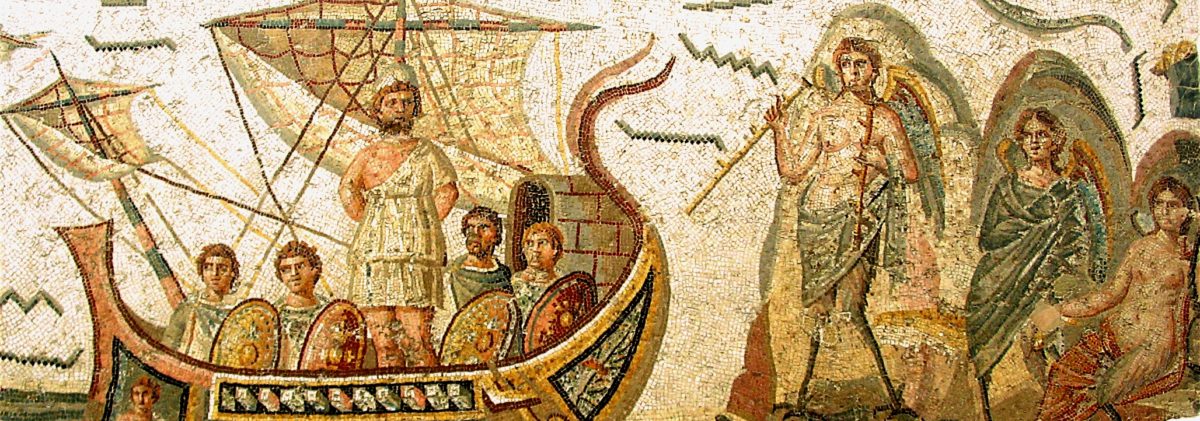
The Iliad and the Odyssey are often regarded as being among the greatest works of world literature and many people have an interest in reading them—but how does one go about starting? Which translations are the best? In what manner should one read them? In this post, I will give advice in response to all these questions and discuss both the strengths and shortcomings of the most widely read translations, drawing on my experience as someone who has a master’s degree in classics, knows Ancient Greek, and has read the epics in the original Greek as well as in multiple translations.

Continue reading “Advice on Reading Homer in Translation”

What’s the Problem with Elon Musk’s ‘Iliad’ Advice?

On August 24th, 2024, Elon Musk, who is currently one of the richest, most powerful, and most influential human beings on the planet, tweeted, “Can’t recommend The Iliad enough! Best as Penguin audiobook at 1.25 speed.” He accompanied these words with a link to the audiobook edition of E. V. Rieu’s 1946 prose translation of the Odyssey (a different poem from the Iliad), published by Penguin Classics. This tweet has created a lot of discourse in the online classics community, with many classicists criticizing Musk while others are left wondering what there is to criticize. In this post, I will explain what the problems are with Musk’s recommendation, which basically break down into two separate issues: right-wing dog whistling and bad practical advice.

Continue reading “What’s the Problem with Elon Musk’s ‘Iliad’ Advice?”

Why Greece Hasn’t Rebuilt the Agora

Almost every tourist who has ever visited Athens has at some point thought about how amazing it would be if the city’s monuments were restored to how they looked when they were new in classical antiquity. A couple of months ago, the website UnHerd, which has right-wing and libertarian political leanings and specializes in what it calls “slow journalism,” published an essay by Nicholas Boys Smith titled “It’s time to rebuild ancient Athens,” in which Smith proposes that Greece should fully restore the Athenian agora (the ancient central market and meeting place of the city) to how it looked in antiquity. This is a fairly common sentiment, so I wanted to take this opportunity to address it.

In this post, I will discuss why restoring Athens’ ancient ruins to how they looked in antiquity hasn’t already happened in the way that many tourists like Smith have hoped and the problems that such a restoration would certainly entail. Most ancient historians and archaeologists do support the idea of restoration to some degree or another, but we also recognize that restoration must be balanced with other concerns.

Continue reading “Why Greece Hasn’t Rebuilt the Agora”

New Fragments of Euripides Discovered!

As I previously discussed in this post I wrote back in 2021, the vast majority of ancient Greek drama has not survived to the present day. Of the hundreds of Greek tragic playwrights who flourished in antiquity, only three have any plays that have survived to the present day complete under their own names: Aischylos, Sophokles, and Euripides. At least ninety-five plays attributed to Euripides circulated in antiquity. Of these, only nineteen have survived to the present day complete and only eighteen of them are actually his work. (One of the surviving plays attributed to him, Rhesos, is generally agreed by modern scholars to be the work of a different playwright wrongly attributed to Euripides.)

Many of Euripides’s lost plays, however, are not totally lost; fragments of them survive. Some of these fragments are preserved through quotation by later ancient writers in surviving works, while others survive on papyri that have been discovered in Egypt over the past roughly century and a half. Some of these fragments are as long as whole scenes, while others are as short as a single word. A new expansion to Euripides’s surviving corpus, however, has just arrived. On August 1st, 2024, two classics professors at the University of Colorado Boulder announced that they have identified substantial previously unknown sections from two of his lost tragedies on a papyrus recently discovered in Egypt. This is a positively electrifying discovery for the field of classics.

Continue reading “New Fragments of Euripides Discovered!”

In Defense of Hegelochos

The Athenian tragic playwright Euripides (lived c. 480 – c. 406 BCE) is known for adapting traditional myths in highly innovative and sometimes controversial ways. In spring 408 BCE, his perhaps most iconoclastic tragedy Orestes premiered at the City Dionysia in the Theater of Dionysos Eleuthereus on the south slope of the Athenian akropolis. The play addresses the same myth as Aischylos’s earlier tragedy Eumenides, but radically alters the plot. In Aischylos’s play, the character Orestes stands trial before a jury of Athenians and is acquitted of the crime of murdering his own mother. In Euripides’s adaptation, by contrast, Orestes (along with his accomplices Pylades and Elektra) are convicted and sentenced to death in Argos and attempt to escape through murder and hostage-taking.

The play’s radically revisionist treatment of a classic myth, however, is not the only reason why its first performance is famous. Several ancient scholarly commentaries, known as scholia, attest that, in the first performance of the play, Orestes was portrayed by an actor named Hegelochos, who messed up one of his lines and won eternal ridicule. In this post, however, I will argue that Hegelochos may not be entirely (or perhaps at all) to blame for the infamous slip-up, which may owe just as much or more to the audience’s mishearing.

Continue reading “In Defense of Hegelochos”

What Do the Newly-Read Herculaneum Papyri Actually Tell Us about Plato?

Readers who have been paying attention to the news may have seen that a group of researchers led by Graziano Ranocchia of the University of Pisa in Italy have recently used modern technology to read portions of a carbonized scroll from the library of the Villa of the Papyri in Herculaneum bearing a history of Plato’s Akademia written by the Epicurean philosopher and poet Philodemos of Gadara, who lived in the first century BCE and died sometime between c. 40 and c. 35 BCE. The newly-readable parts of the scroll include an anecdote about how Plato supposedly died and more specific information than was previously known about where he was buried.

In this post, I will briefly discuss the actual historical, literary, and philosophical significance of these findings. While the findings are genuinely significant, a lot of media coverage has been rather sensationalistic and has perhaps raised some false assumptions and hopes about what these discoveries mean. This post will serve as a scholarly counterpoint to these assumptions.

Continue reading “What Do the Newly-Read Herculaneum Papyri Actually Tell Us about Plato?”